
Driving Safely in Heavy Rain and Flooded Roads
How to drive safely in heavy rain, avoid aquaplaning, handle flooded roads, and what to do if your car stalls in water.
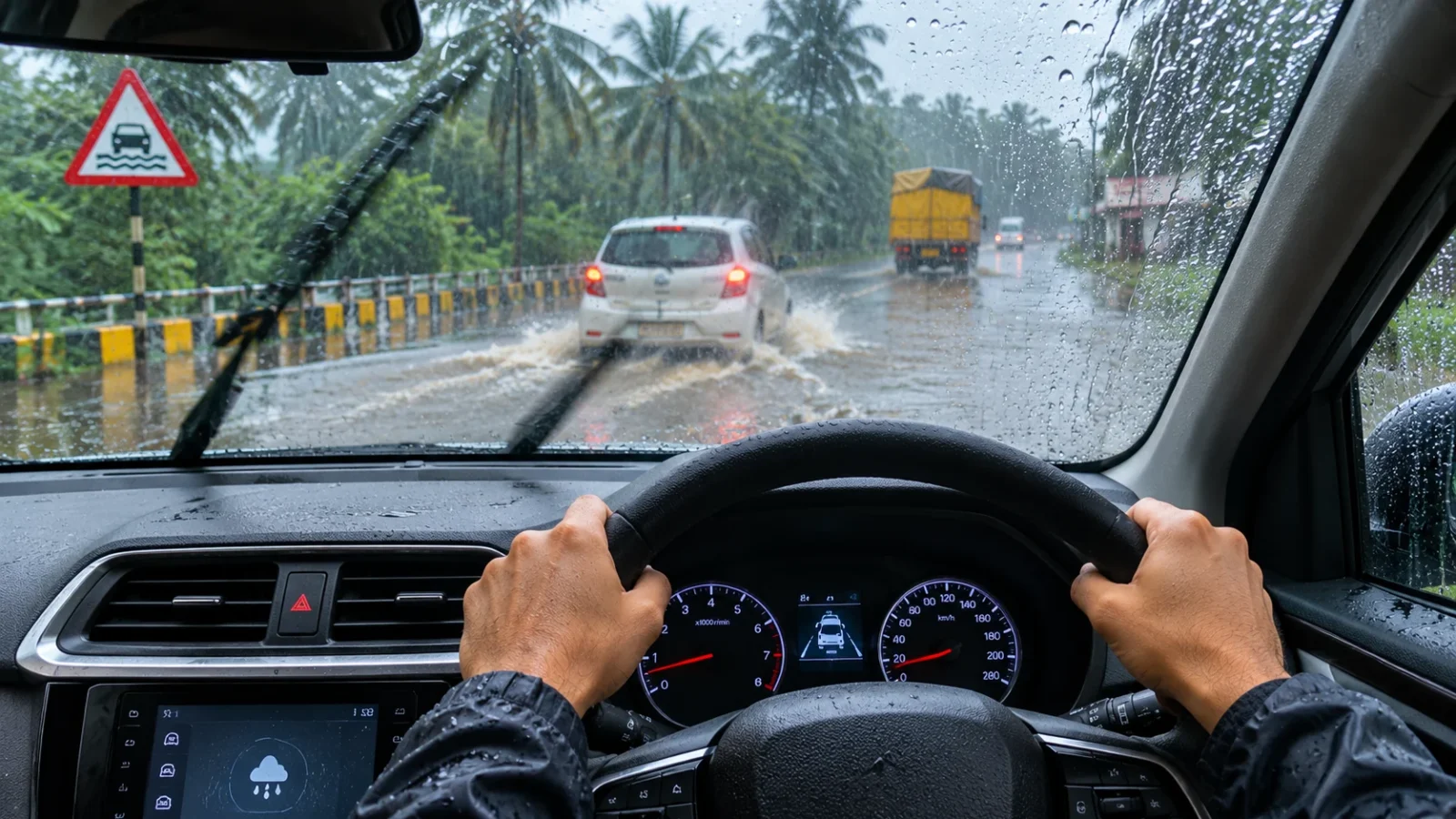
Driving Safely in Heavy Rain and Flooded Roads:- Heavy rain cuts visibility and grip, and flooded roads can be dangerous. These guidelines will help you stay safe. If conditions are extreme, the safest option is not to drive.
Before you set out
- Check the weather and local traffic or flood alerts.
- Delay or cancel the trip if heavy rain or flooding is forecast on your route.
- Make sure wipers, tyres, brakes and lights are in good order. See our monsoon car care checklist.
- Carry a charged phone, power bank, torch and a basic emergency kit.
Driving in heavy rain
- Slow down. Wet roads need longer stopping distances.
- Increase your following distance to at least double the usual gap. See defensive driving tips.
- Switch on headlamps so others can see you.
- Brake and steer gently. Avoid sudden inputs.
- Keep the windows clear by using the AC and demister.
- Avoid cruise control on wet roads.
- Stay away from large vehicles that throw up spray.
- If visibility is dangerously poor, pull over safely away from traffic and wait.
Aquaplaning
Aquaplaning (hydroplaning) happens when tyres ride on a film of water and lose contact with the road. If it happens, the steering may feel light. Do not brake hard or turn sharply. Ease off the accelerator, hold the steering straight and let the car slow until the tyres regain grip. Good tread and correct pressure reduce the risk. See our tyre care guide.
Flooded roads: the rule is to avoid them
It is hard to judge water depth, and the road beneath may be damaged or missing. Even relatively shallow moving water can push a car off course, and water roughly knee-deep or less can be enough to float many cars. If you cannot clearly see the depth and the road surface, turn around and find another route.
If you have to cross shallow standing water
- Only attempt it if the water is clearly shallow and not moving fast. Watch other vehicles first.
- Drive slowly and steadily in a low gear, keeping the engine speed up to prevent water entering the exhaust, without creating a large bow wave.
- Do not stop in the water.
- Test your brakes lightly afterwards to dry them out.
Check your owner’s manual for the maximum wading depth, which is lower than many people assume. Electric cars have sealed battery packs, but follow the manufacturer’s guidance. See how electric cars work.
If the car stalls in water
- Do not restart the engine. Water drawn into the engine can cause severe, expensive damage (hydrolock).
- Switch off the ignition and, if the water is rising, leave the car and move to higher ground.
- Call roadside assistance or emergency services.
- Do not stay inside a car in rising water.
Have the car towed and inspected, even if it seems fine. Water damage can affect electronics and wiring later.
After the rain
- Check the brakes, lights and wipers.
- Dry the cabin and carpets to prevent mould and electrical faults.
- Have the car serviced if it was in deep water.
Insurance
Engine damage from water is often not covered unless you have an add-on. Read car insurance in India explained. Also note that flood-damaged cars sometimes appear on the used market, so use our used car inspection checklist when buying.
Frequently asked questions
Should I use hazard lights in heavy rain?
Generally only when stopped or in very poor visibility and where the law allows. Headlamps are the better choice while moving.
Can I drive an EV through water?
Follow the maximum wading depth in the manual, and avoid deep or fast-moving water. See charging safety for charging in wet conditions.

Related articles
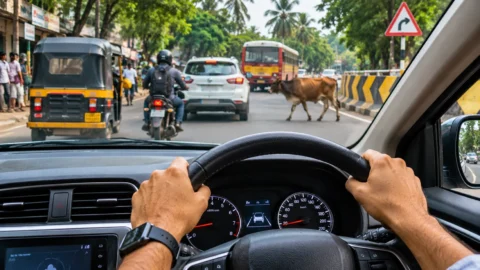
Defensive Driving Tips for Indian Roads
Practical defensive driving habits for Indian roads, from following distance and two-wheelers to night driving, ghat roads and fatigue.
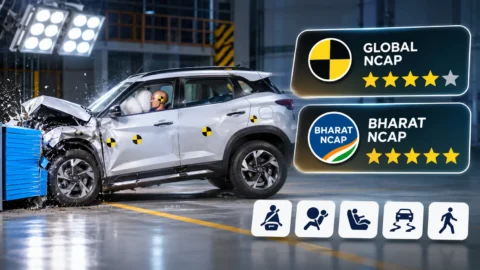
Car Safety Ratings Explained: NCAP and Bharat NCAP Stars
What do NCAP and Bharat NCAP star ratings really mean? Learn how to read crash-test results and which safety features matter most.
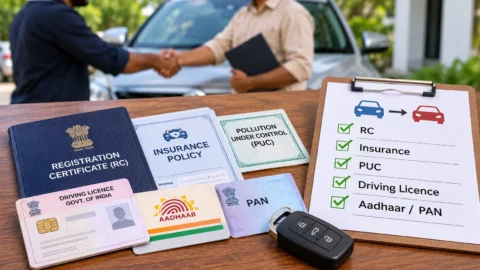
Documents Needed to Buy or Sell a Car in India
A practical checklist of the documents and forms needed to buy or sell a car in India, including RC transfer, insurance and…
0 comments