
Car Safety Ratings Explained: NCAP and Bharat NCAP Stars
What do NCAP and Bharat NCAP star ratings really mean? Learn how to read crash-test results and which safety features matter most.
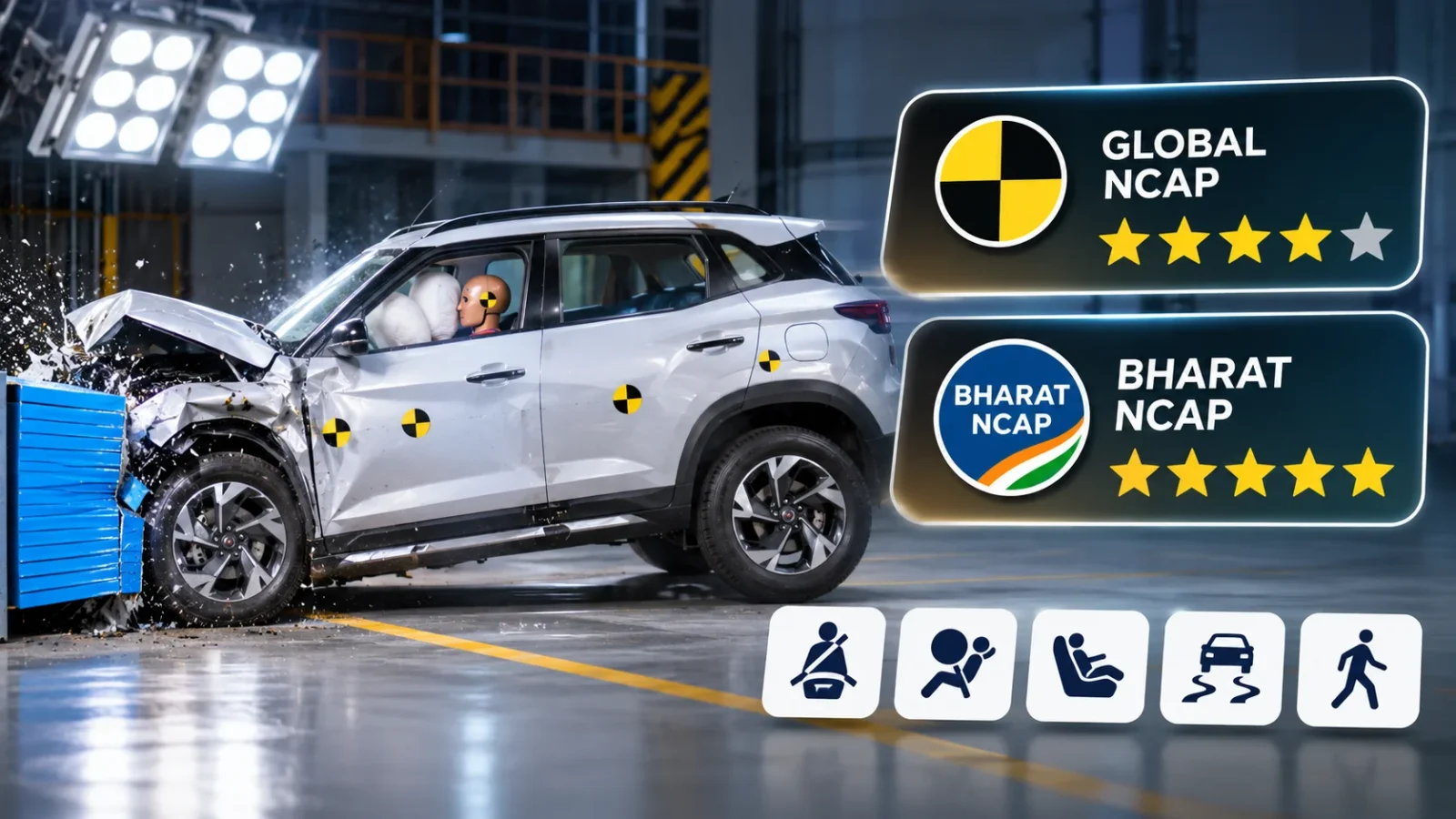
Car Safety Ratings Explained: NCAP and Bharat NCAP Stars:- When choosing a car, the safety rating is one of the most useful pieces of information. But a star rating is easy to misread. Here is what it means and how to use it.
What is NCAP?
NCAP stands for New Car Assessment Programme. Independent organisations crash-test cars and publish ratings. Well-known programmes include Euro NCAP, ASEAN NCAP and Global NCAP, and India now has its own programme, Bharat NCAP, launched in 2023, which tests cars sold in India and rates them up to five stars.
What the stars measure
Ratings are usually given separately for:
- Adult occupant protection: how well the car protects adults in a crash.
- Child occupant protection: how well child seats and the car protect children.
- Some programmes also assess safety assist technology, such as electronic stability control and seatbelt reminders.
Tests typically include frontal and side impacts, and the programmes also check specific safety features.
How to read a rating properly
- Check which variant was tested. Lower variants may have fewer airbags or safety features than the tested car.
- Check the date and protocol. Test standards get stricter over time, so a five-star rating from years ago is not the same as a five-star rating today.
- Look at the adult and child scores separately. Do not rely only on the headline number.
- Compare within the same programme. Ratings from different programmes are not directly comparable.
- Remember what stars do not show: real-world crash outcomes, road conditions, how well the car has been maintained and your driving behaviour.
Safety features that matter most
- Airbags: at least front airbags; side and curtain airbags add protection.
- Electronic stability control (ESC): helps prevent skids and loss of control.
- ABS with EBD: keeps steering control during hard braking.
- Three-point seatbelts for all seats and seatbelt reminders.
- ISOFIX child seat anchors.
- Rear parking sensors or camera.
- Advanced driver assistance systems (ADAS): useful features such as automatic emergency braking exist on some models, though they are not a substitute for attentive driving.
Structure and build
A strong passenger cell, effective crumple zones and good seatbelt pretensioners work together with the airbags. This is what the crash tests mostly measure.
Using safety in your decision
Check safety first when you build your shortlist. See how to choose your first car and how to pick the right variant, because safety features vary by trim. Also read the safety section in how to read a car brochure.
Safety is also about you
- Always wear seatbelts, including in the rear seats.
- Use proper child seats.
- Keep tyres and brakes in good condition. See tyre care.
- Learn defensive driving.
Frequently asked questions
Is a five-star car always safe?
It is a strong sign of good crash protection in the tested conditions, but safe driving still matters.
Where can I find ratings?
Check the official Bharat NCAP, Global NCAP and Euro NCAP websites for the latest results.

Related articles
Dashboard Warning Lights and What They Mean
Understand common dashboard warning lights, their colours and what to do when they come on, from check engine to oil pressure and…

Driving Safely in Heavy Rain and Flooded Roads
How to drive safely in heavy rain, avoid aquaplaning, handle flooded roads, and what to do if your car stalls in water.
Defensive Driving Tips for Indian Roads
Practical defensive driving habits for Indian roads, from following distance and two-wheelers to night driving, ghat roads and fatigue.
0 comments