
Dashboard Warning Lights and What They Mean
Understand common dashboard warning lights, their colours and what to do when they come on, from check engine to oil pressure and ABS.
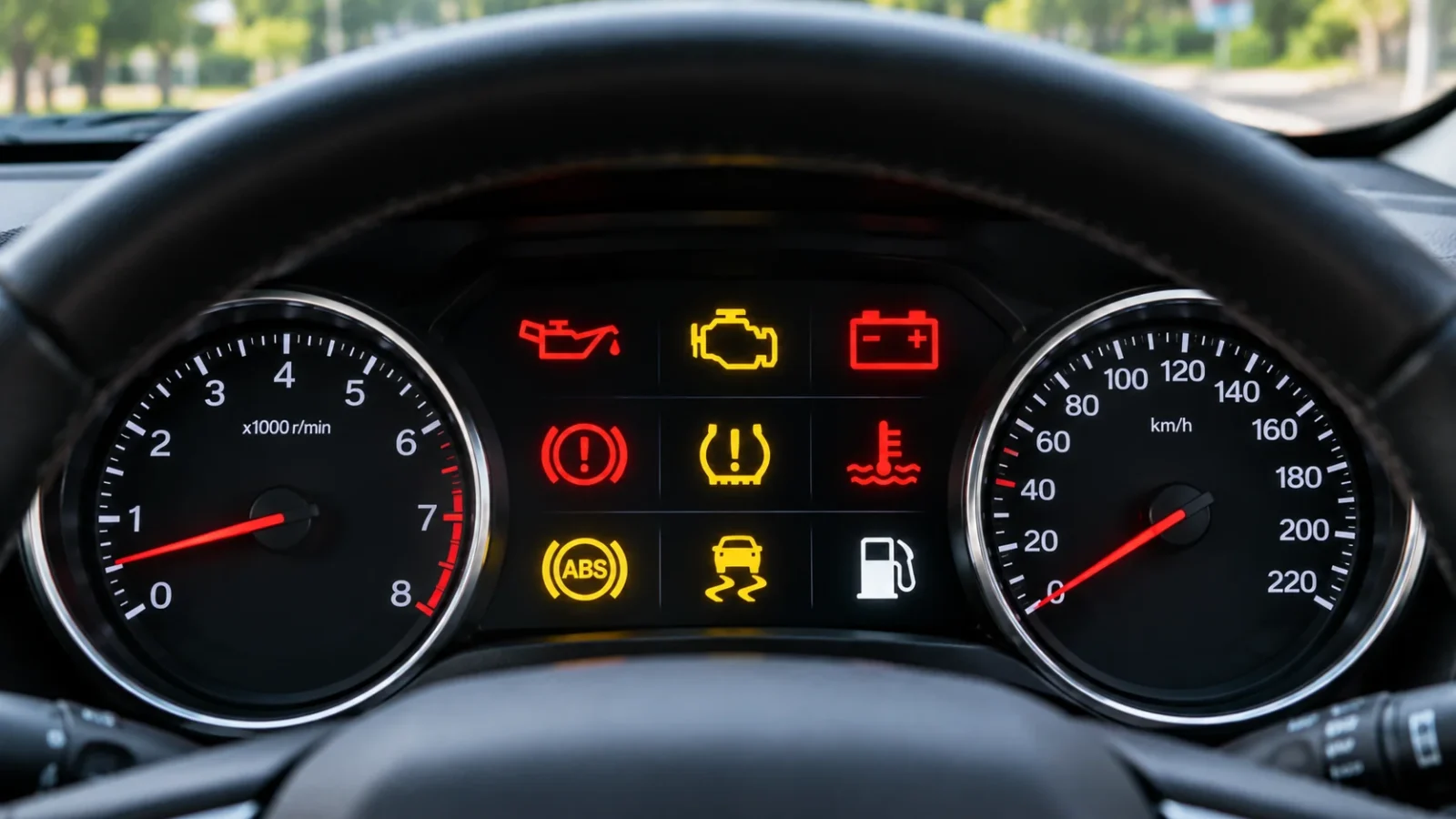
Warning lights tell you when something needs attention. Knowing what they mean helps you decide whether to keep driving or stop immediately. Symbols vary slightly between cars, so check your manual for exact meanings.
The colour code
- Red: a serious problem or safety issue. Stop safely as soon as possible and investigate.
- Amber or yellow: something needs attention soon. Get it checked.
- Green or blue: a system is on or active, such as headlamps or cruise control.
Common red warning lights
Oil pressure warning
Indicates low oil pressure. Stop the engine as soon as it is safe to do so and check the oil level. Driving on can destroy the engine. See how to check engine oil.
Engine temperature or coolant warning
The engine is overheating. Pull over, switch off and let it cool before opening the bonnet. Never open the radiator cap while hot.
Brake system warning
Could mean the handbrake is on, brake fluid is low or there is a fault. If it stays on with the handbrake released, have the brakes inspected before driving further.
Battery or charging warning
The charging system may be failing, often due to the alternator or a belt. The car may soon lose power. See car battery problems.
Airbag or seatbelt warning
The airbag system may not work in a crash. Get it checked promptly.
Common amber warning lights
Check engine light
A fault in the engine, emissions or fuel system. If it is steady, have it scanned soon. If it is flashing, reduce speed and get the car checked immediately, as a flashing light can indicate a serious misfire that damages the catalytic converter.
ABS warning
The anti-lock braking system may be disabled, although normal brakes should still work. Drive carefully and get it repaired.
Tyre pressure warning (TPMS)
One or more tyres are low on pressure. Check and correct them. See our tyre care guide.
Power steering warning
The steering may become heavy. Drive carefully and get it checked.
Traction or stability control
A flashing light means the system is working, such as on a slippery road. A steady light can mean the system is off or faulty.
Diesel particulate filter or glow plug
In diesel cars, these indicate filter clogging or glow-plug problems. Follow the manual’s guidance, which often includes a longer drive at steady speed or a visit to the workshop.
Electric and hybrid cars
EVs have extra warnings for the high-voltage battery, charging system and powertrain. If one appears, follow the manual and call roadside assistance. See how electric cars work.
What to do when a light comes on
- Note the colour and whether it is flashing.
- If red, stop in a safe place and switch off.
- Check the manual for the symbol.
- Book a diagnostic scan at a trusted workshop. Mention it at your next service.
Frequently asked questions
Can I keep driving with the check engine light on?
If steady and the car runs normally, you can drive carefully to a workshop. If flashing, or the car runs roughly, stop and get help.
Can I clear the light myself?
Clearing it without fixing the cause will let it return. Get the fault code read first.

Related articles

Car Safety Ratings Explained: NCAP and Bharat NCAP Stars
What do NCAP and Bharat NCAP star ratings really mean? Learn how to read crash-test results and which safety features matter most.
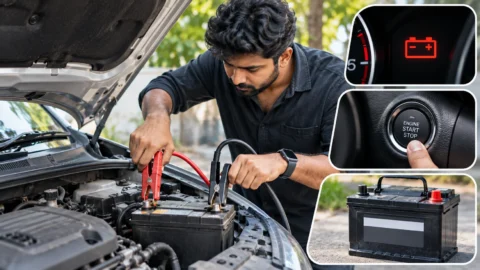
Car Battery Problems: Signs, Jump-Starting and Replacement
Learn the warning signs of a failing car battery, how to jump-start safely, and when and how to replace it without overpaying.

12 Ways to Improve Your Car’s Mileage
Get more kilometres from every litre. These 12 practical tips on driving habits, tyres, servicing and load can noticeably cut your fuel…
0 comments