
How Do Electric Cars Work? A Beginner’s Guide
New to EVs? This beginner's guide explains how electric cars work, from the battery and motor to regenerative braking and charging.
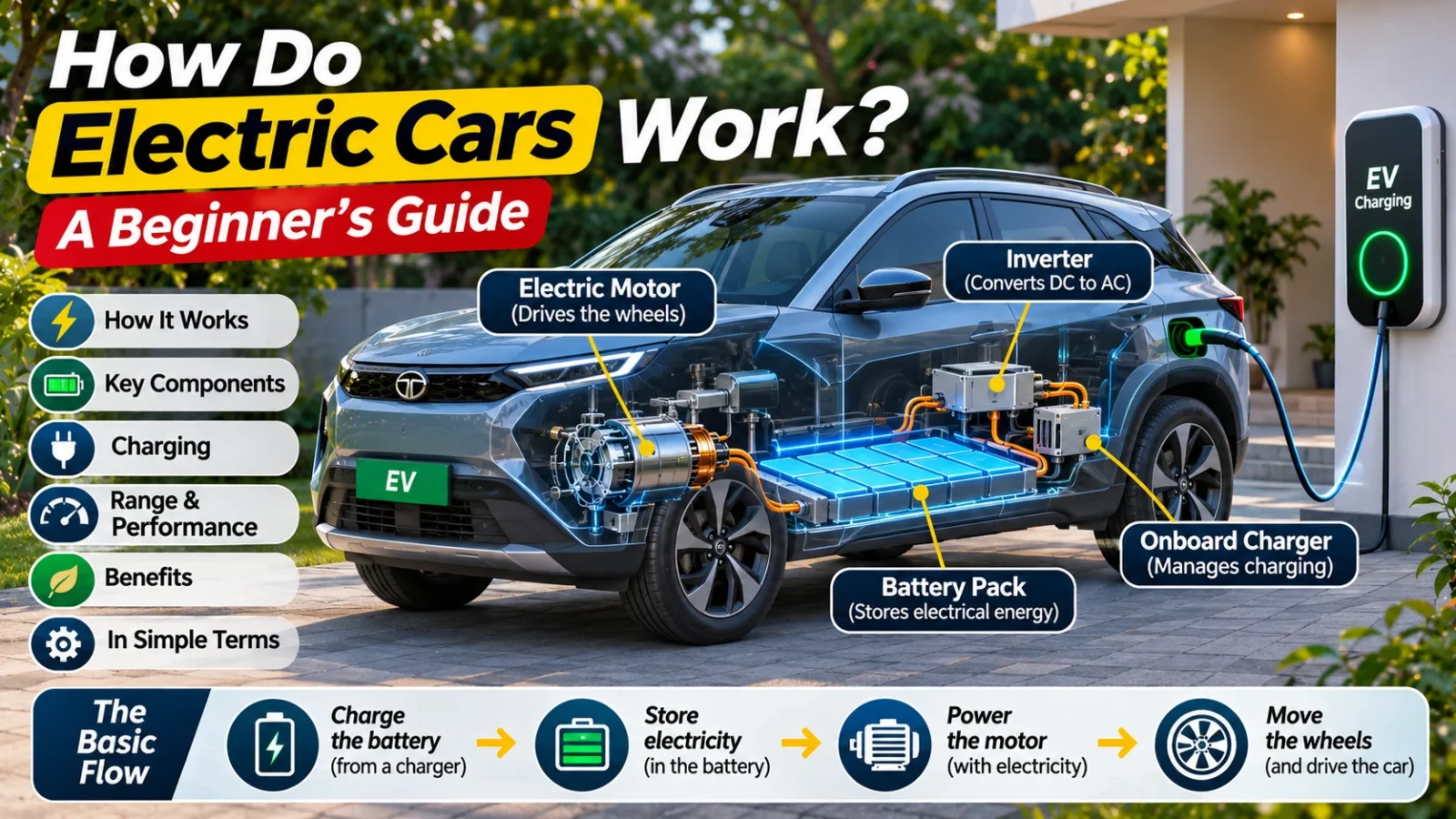
Electric cars (EVs) are simpler than petrol cars in many ways, but they come with new terms. Here is what is under the floor and how it all fits together.
The main parts
- Battery pack: a large lithium-ion battery that stores energy. Its capacity is measured in kilowatt-hours (kWh), like the size of a fuel tank.
- Electric motor: turns electrical energy into motion. Electric motors deliver instant torque, which is why EVs feel quick off the line.
- Inverter: converts the battery’s direct current (DC) into alternating current (AC) for the motor and controls its speed.
- Onboard charger: converts AC electricity from a home or public AC charger into DC to charge the battery.
- Battery management system (BMS): monitors temperature, voltage and health of each cell to keep the battery safe.
- Thermal management: a cooling (and sometimes heating) system that keeps the battery at a healthy temperature.
- Single-speed transmission: most EVs have just one gear ratio, so there is no gear shifting.
How it drives
When you press the accelerator, the controller sends power from the battery through the inverter to the motor. Because the motor produces torque instantly and there is no gearbox shifting, the car accelerates smoothly and quietly.
Regenerative braking
When you lift off the accelerator or brake, the motor works in reverse as a generator and sends some energy back into the battery. This recovers energy that would be lost as heat in conventional brakes and extends range, especially in city driving. Many EVs let you adjust the strength of regeneration, and some allow “one-pedal driving”.
Charging: AC and DC
- AC charging (home or public) is slower, because the car’s onboard charger limits the speed. It is ideal overnight.
- DC fast charging bypasses the onboard charger and feeds the battery directly, giving much faster charging on the road.
Learn more in how to charge an EV at home and public EV charging in India.
What decides range?
Range depends on battery size, driving speed, temperature, use of air conditioning, road conditions, tyres and your driving style. Highway speeds usually reduce range more than city driving, the opposite of petrol cars. See tips to get more range.
Maintenance
EVs have no engine oil, spark plugs or exhaust, and brakes tend to wear slowly due to regeneration. They still need tyre care, cabin filters, brake fluid, coolant checks and suspension servicing. The 12-volt battery that runs lights and electronics can also fail; see car battery problems.
Is an EV right for you?
EVs work best if you can charge at home or work. Check the EV vs petrol cost comparison and consider whether a hybrid might suit you better.
Frequently asked questions
Do EVs need gear changes?
Most do not. They use a single-speed transmission.
Are EVs safe in rain?
Manufacturers design EVs with sealed, waterproof batteries and charging ports. Still follow the owner’s manual advice about deep water. See driving in heavy rain and flooded roads.

Related articles
EV Battery Life and Warranty: What Buyers Should Know
How long do EV batteries last, and what does the warranty cover? Understand degradation, warranty terms and habits that protect battery health.
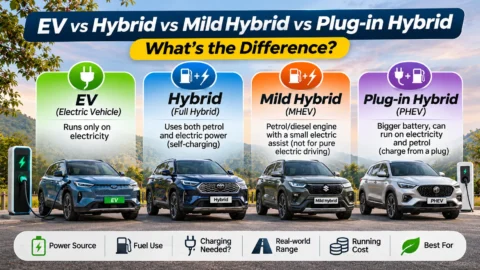
EV vs Hybrid vs Mild Hybrid vs Plug-in Hybrid: What’s the Difference?
Mild hybrid, strong hybrid, plug-in hybrid or full EV? Learn how each type works and which one suits your driving and budget.
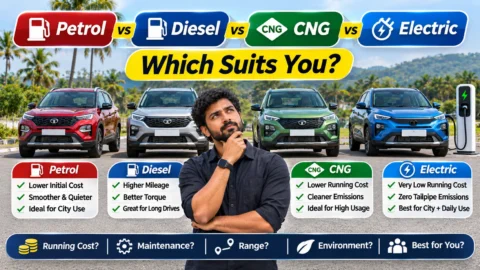
Petrol vs Diesel vs CNG vs Electric: Which Suits You?
Petrol, diesel, CNG or electric? Compare the real pros, cons and ideal drivers for each fuel type to choose the right car…
0 comments