
Public EV Charging in India: Charger Types, Apps and Etiquette
A practical guide to public EV charging in India: charger types, connectors, apps, payment, trip planning and good charging etiquette.
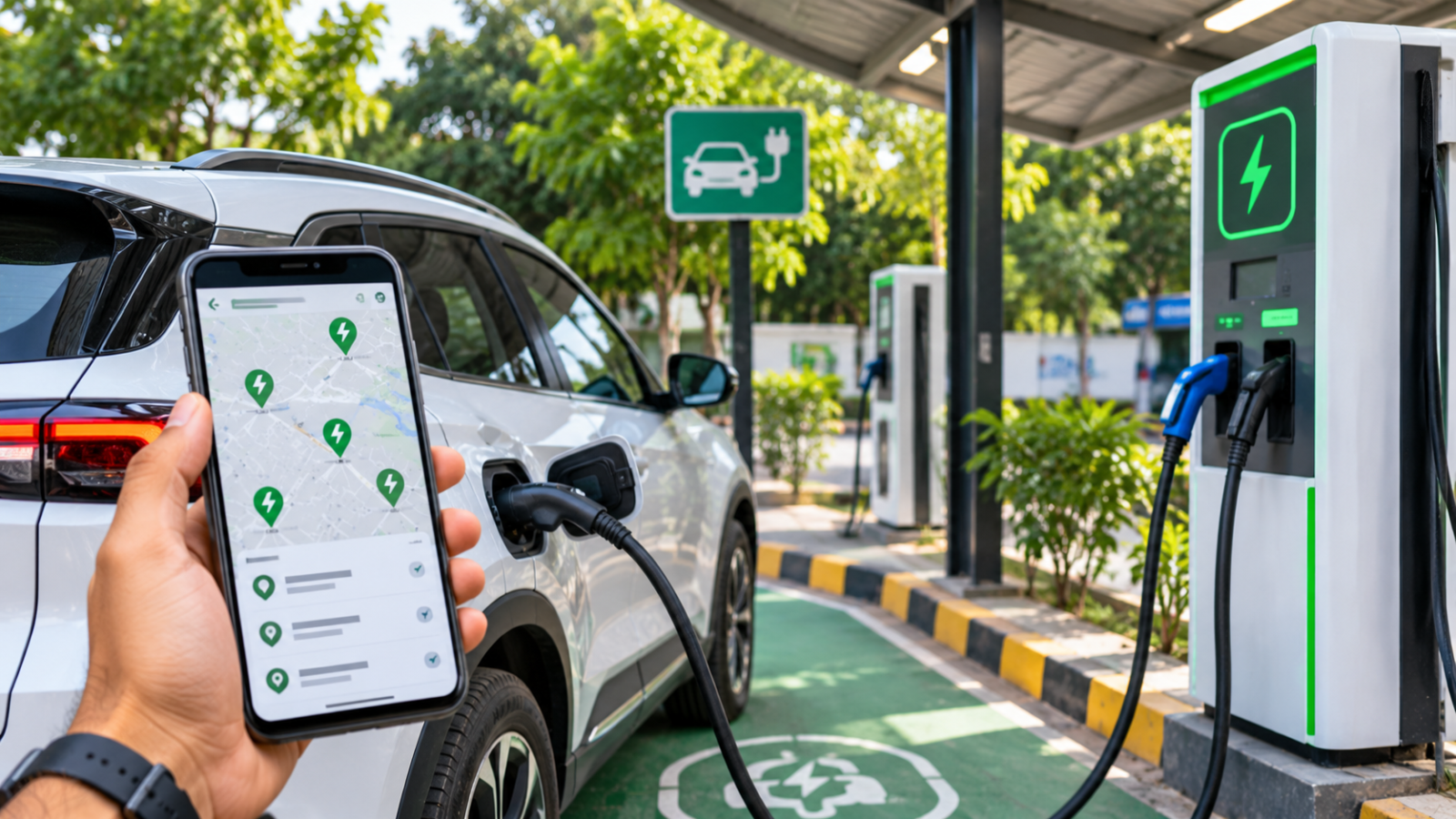
Public EV Charging in India:- Home charging covers most needs, but public chargers matter for long trips and for owners without home parking. Here is how public charging works and how to use it smoothly.
Types of public chargers
- AC chargers: slower, suitable for long stops such as at malls, offices or hotels. Charging speed is limited by the car’s onboard charger.
- DC fast chargers: much faster, ideal for highway stops. Their speed depends on both the charger’s power and what your car can accept.
Connectors
CCS2 is the commonly used connector for DC fast charging in most four-wheelers sold in India today, and many cars use a Type 2 inlet for AC. Check your car’s charging inlet and the charger’s connector before you drive to a station, and carry any cable or adapter your car needs. Connector standards and availability can vary by model and change over time, so confirm with your manufacturer.
Finding and paying for chargers
- Use the manufacturer’s app, charging operator apps and map-based charger finders. Check live availability and recent user comments where available.
- Many networks need their own app, RFID card or QR payment. Set up accounts and wallets before your trip.
- Prices differ by operator and location, and are generally higher than home electricity. See our running-cost comparison.
Planning a long trip
- Map your route with charging stops at intervals shorter than your real-world range.
- Have at least one backup charger near each planned stop.
- Keep a safety buffer of 10 to 15 percent charge on arrival. See tips to extend range.
- Check opening hours and whether the charger works at night.
- Carry a portable charger as a last-resort backup, if your car supports it.
Fast-charging tips
- Charging is fastest at lower states of charge and slows as the battery fills. Often it is quicker to charge from about 10 to 80 percent and move on than to wait for 100 percent.
- Battery temperature affects speed; some cars precondition the battery when you set a charger as your destination.
Etiquette
- Do not block a charger after your session finishes; move the car as soon as you are done.
- Do not park a petrol or diesel vehicle in an EV charging bay.
- Keep cables tidy and return them to the holder.
- Report faulty chargers to the operator so others do not waste time.
- Be patient, and let others know if you only need a short top-up.
Safety
Do not use damaged connectors, avoid charging in flooded areas and keep the charge port covered when not in use. See driving in heavy rain and flooded roads.
Is public charging enough on its own?
For most owners, public charging works best as a supplement to a home charger. Read how to charge an EV at home before buying. The network keeps growing, so check what is available on your usual routes.
Frequently asked questions
How long does DC fast charging take?
It depends on the car and charger, but often around 30 to 60 minutes for a significant top-up.
Can all EVs use all chargers?
Not always. Check connector type and power compatibility. If you are comparing models, see our EV basics.

Related articles
How to Get More Range from Your EV: Practical Tips
Want your EV to go further on a charge? These practical tips on speed, tyres, climate control and planning can add real…
EV Battery Life and Warranty: What Buyers Should Know
How long do EV batteries last, and what does the warranty cover? Understand degradation, warranty terms and habits that protect battery health.
How to Charge an EV at Home: Equipment, Cost and Safety
Planning to charge your EV at home? Learn about charger types, installation, costs and the safety checks to get right before you…
0 comments