
EV Battery Life and Warranty: What Buyers Should Know
How long do EV batteries last, and what does the warranty cover? Understand degradation, warranty terms and habits that protect battery health.
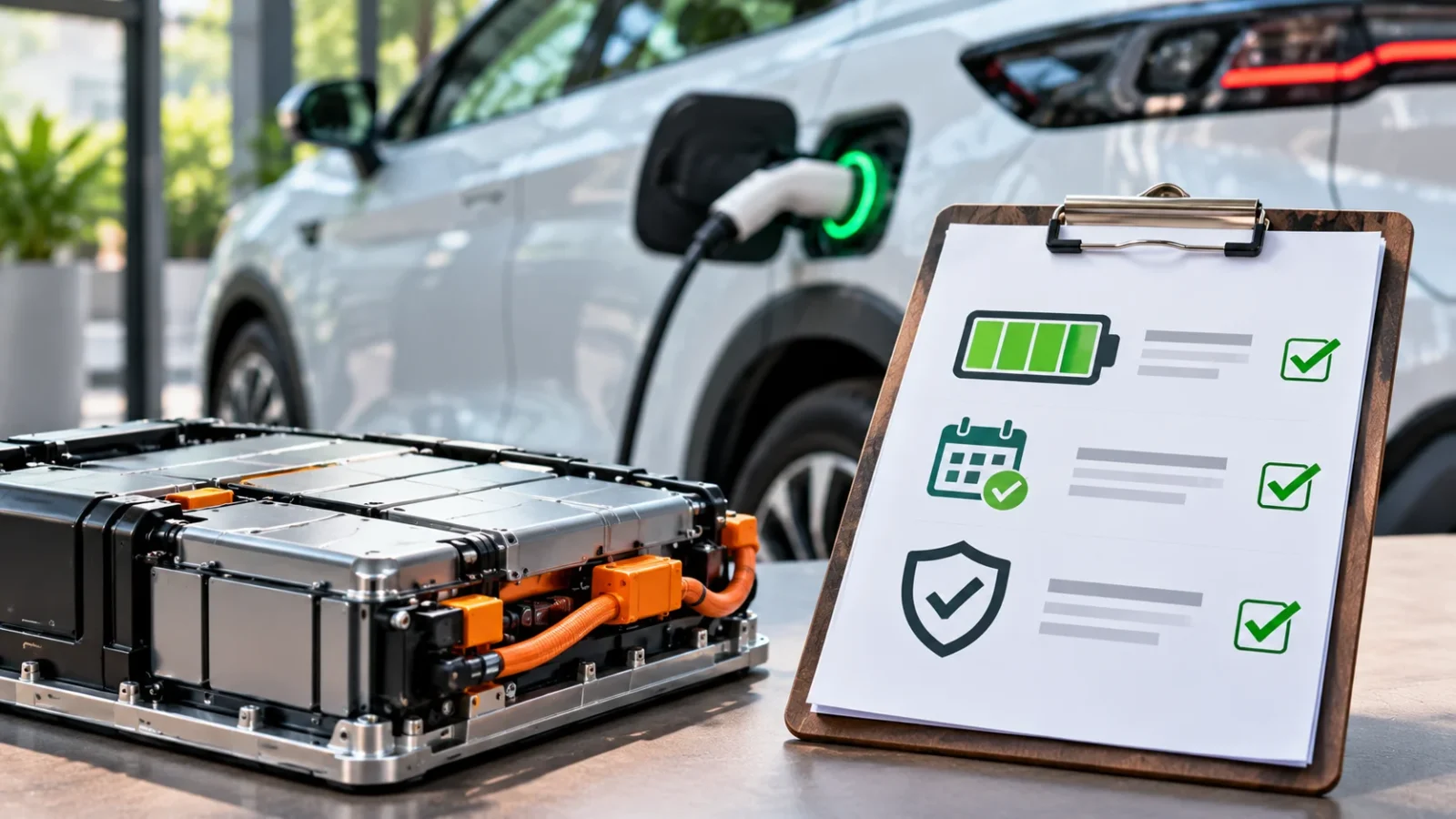
The battery is the most expensive part of an electric car, so battery life is a top concern for buyers. Here is what to understand before you buy.
How EV batteries age
Lithium-ion batteries slowly lose capacity over time and with use, a process called degradation. The loss is usually gradual, so range reduces a little each year rather than the battery suddenly failing. Many modern batteries retain most of their capacity for a long time, but the pace depends on the car, climate and usage.
What speeds up degradation
- Heat: hot climates and parking in the sun for long periods stress batteries.
- Frequent DC fast charging: occasional use is fine, but relying on it for every charge can add stress over time.
- Regularly charging to 100 percent or running to near zero: staying at extreme states of charge is harder on the battery.
- Heavy, aggressive driving: repeated high power use adds heat.
Habits that protect the battery
- Do most daily charging at home using AC. See how to charge an EV at home.
- For daily use, many manufacturers suggest charging to about 80 to 90 percent and charging to full only when needed for trips.
- Avoid leaving the car at very low or very high charge for long periods.
- Park in shade when possible.
- Follow the manufacturer’s software updates and service advice.
Understanding the warranty
EV batteries typically come with a long warranty in years and kilometres, often longer than the car’s standard warranty. The terms vary by manufacturer, so read the details:
- How many years and how many kilometres are covered.
- Whether the warranty guarantees a minimum state of health (for example a stated percentage of original capacity) and how it is measured.
- What happens if the battery falls below this level: repair, module replacement or full replacement.
- Whether the warranty transfers to a second owner.
- Conditions that can void it, such as unapproved modifications or damage.
Battery replacement cost
A full pack replacement can be very costly, though many problems are fixed by replacing individual modules. Ask the dealer about replacement costs and the availability of repair at authorised centres.
Buying a used EV
- Ask for a battery state-of-health report from an authorised service centre.
- Check how much warranty remains and whether it transfers.
- Look at the car’s charging history, if available.
- Be careful with flood-affected vehicles. Read our used car inspection checklist.
Hybrids
Hybrid batteries are smaller and also come with long warranties. Compare terms when you read our hybrid explainer.
Frequently asked questions
Will my EV need a new battery soon?
For most owners within the warranty period, it should not. Degradation is typically gradual.
Does fast charging damage the battery?
Occasional fast charging is normal. Make home AC charging your default. See also public EV charging.
Consider battery warranty terms in your cost comparison.

Related articles
How Do Electric Cars Work? A Beginner’s Guide
New to EVs? This beginner's guide explains how electric cars work, from the battery and motor to regenerative braking and charging.
Petrol vs Diesel vs CNG vs Electric: Which Suits You?
Petrol, diesel, CNG or electric? Compare the real pros, cons and ideal drivers for each fuel type to choose the right car…
Public EV Charging in India: Charger Types, Apps and Etiquette
A practical guide to public EV charging in India: charger types, connectors, apps, payment, trip planning and good charging etiquette.
0 comments