
How to Buy a Used Car in India: A 15-Point Inspection Checklist
Use this 15-point checklist to inspect a used car in India, spot accident or flood damage, and verify paperwork before you pay.
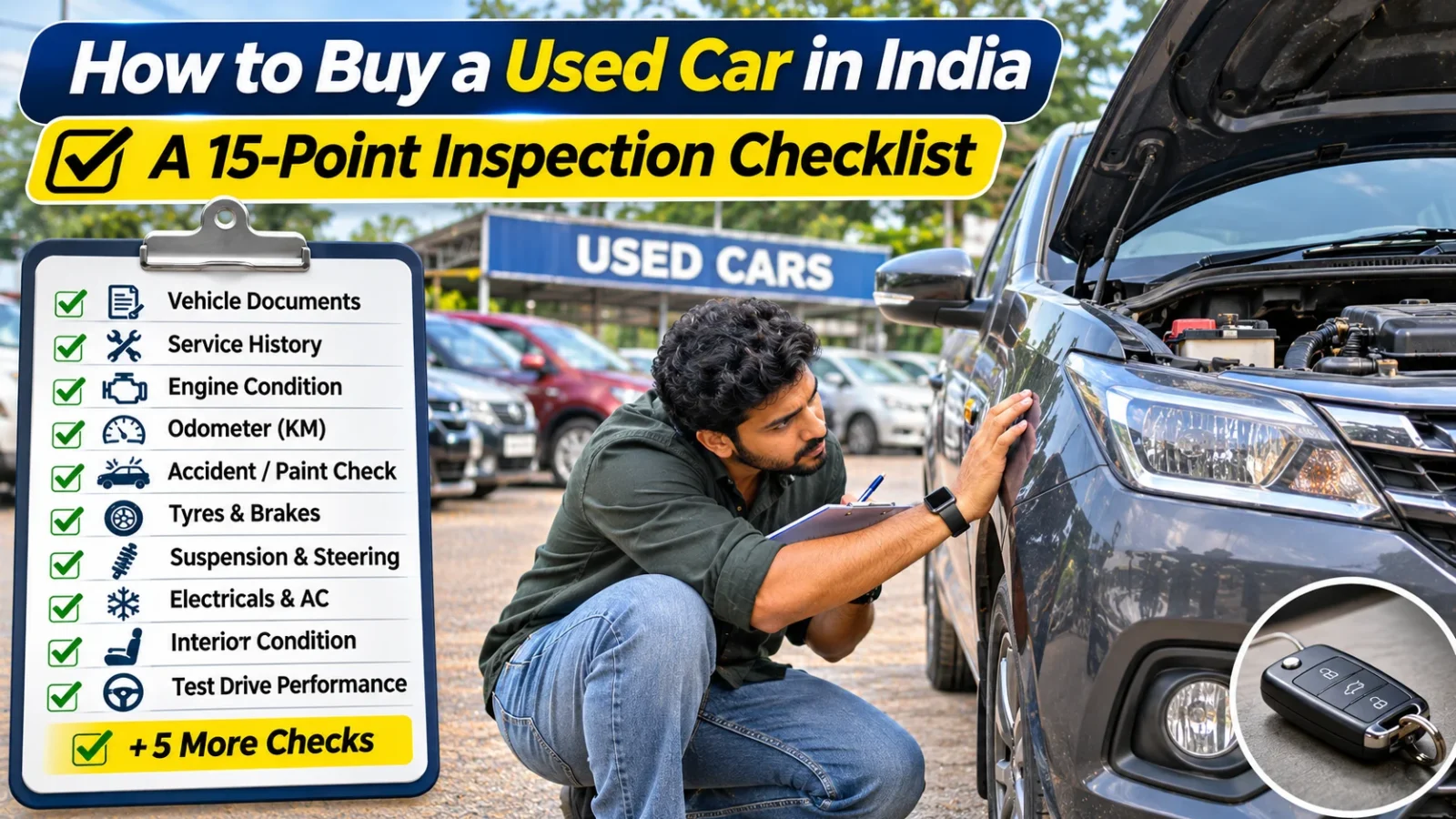
A used car can be excellent value, but a bad one can drain your wallet. This 15-point checklist helps you separate good cars from problem cars. If possible, bring an experienced mechanic along, and never rush.
Paperwork checks
- Registration Certificate (RC): Check that the name matches the seller and that the chassis and engine numbers on the RC match those stamped on the car.
- Insurance and PUC: Confirm valid insurance and a pollution certificate, and check the no-claim bonus status.
- Loan or hypothecation: If a loan is listed on the RC, make sure it is closed and the bank’s no-objection documents are available.
- Service records and challans: A full service history is a strong plus. Check for pending traffic fines.
Exterior and body
- Panel gaps and paint: Uneven gaps, mismatched colour or paint overspray on rubber seals can mean accident repairs.
- Rust and underbody: Look under the car, inside the wheel arches and at the door bottoms.
- Tyres: Uneven wear can point to alignment or suspension issues. Check the manufacture date code on the sidewall.
- Lights and glass: Look for cracks, moisture inside lamps and mismatched glass brands.
Interior and electronics
- Flood damage signs: A musty smell, silt in hidden corners, rust on seat rails or damp carpets are red flags, particularly important in monsoon-prone regions.
- Odometer and wear: Heavily worn pedals or seats on a low-mileage car suggest the meter may not tell the truth.
- Electronics: Test the AC, power windows, central locking, infotainment and all warning lights at start-up.
Mechanical checks
- Cold start: Ask for the engine to be started cold. Listen for knocks and check for blue, black or white smoke.
- Leaks and fluids: Look under the engine and check oil and coolant condition. See how to check engine oil and coolant.
- Suspension, brakes and steering: On a test drive, listen for clunks, feel for vibration and check the car tracks straight under braking.
- Gearbox and clutch: Check for smooth shifts, slipping or high clutch bite point. Learn the quirks in our gearbox guide.
Before you pay
- Get an independent inspection from a mechanic you trust.
- Negotiate using the faults you found.
- Use the official transfer process and understand the paperwork described in documents needed to buy or sell a car.
- Do not pay the full amount until the paperwork is complete.
When to walk away
Walk away if the seller refuses an independent inspection, the paperwork does not match, there are signs of flood damage, or the price is far below market without a clear reason.
Frequently asked questions
Is a certified pre-owned car safer?
Often it comes with inspection and a limited warranty, but it costs more. Still run your own checks.
Should I buy from a dealer or an individual?
Both have pros and cons. Individuals can be cheaper; dealers may offer warranty and paperwork support.
If you are comparing options, see New vs Used.

Related articles
Test Drive Checklist: 20 Things to Check Before You Buy
Make your test drive count. Use this 20-point checklist to evaluate comfort, visibility, brakes, noise and more before you buy a car.
New Car vs Used Car: Which Makes More Financial Sense?
Should you buy a new or used car? Compare depreciation, warranty, financing and running costs to find the smarter choice for your…
Base, Mid or Top Variant: How to Pick the Right One
Not sure whether to buy the base, mid or top variant? Learn which features are worth paying for and which you can…
0 comments