
EV vs Petrol: A Real Running-Cost Comparison
How much cheaper is an EV than a petrol car? Use this worked example and simple formula to calculate the running cost for your own driving.
Electric cars cost more to buy but less to run. How much less depends on your electricity tariff, where you charge and how far you drive. Use this method with your own numbers.
The formula
- Petrol cost per km = fuel price per litre / real-world km per litre
- EV cost per km = electricity price per kWh / real-world km per kWh
Use real-world efficiency from owners, not the claimed figure. See how to read a car brochure for why.
Worked example (illustrative numbers)
Assume a driver covers 12,000 km a year. Replace these numbers with your own.
| Item | Petrol car | EV (home charging) | EV (70% home, 30% public) |
|---|---|---|---|
| Energy price | Rs 100 per litre | Rs 8 per kWh | Blended Rs 11.6 per kWh |
| Real-world efficiency | 14 km per litre | 6.5 km per kWh | 6.5 km per kWh |
| Cost per km | about Rs 7.1 | about Rs 1.2 | about Rs 1.8 |
| Cost per year (12,000 km) | about Rs 85,700 | about Rs 14,800 | about Rs 21,400 |
In this example, the EV saves roughly Rs 64,000 to Rs 71,000 a year on energy. The blended column assumes public charging at Rs 20 per kWh for 30 percent of the energy. These are examples, not current prices.
Why public charging matters
Fast charging on the road is usually much costlier per kWh than home electricity, so the more you rely on it, the smaller your savings. Read public EV charging in India and how to charge at home.
Other costs to include
- Purchase price difference: EVs are usually dearer upfront.
- Home charger installation: a one-time cost.
- Servicing: usually lower for EVs, since there is no engine oil or exhaust.
- Insurance: can be higher on higher-priced cars. See our insurance guide.
- Battery risk: read battery life and warranty.
- Resale: the used EV market is still maturing, so resale values are less predictable.
Break-even point
Divide the extra purchase price of the EV (plus charger installation) by your yearly saving. In the example, if the EV costs Rs 4,00,000 more and saves about Rs 65,000 a year, break-even takes about six years. Cheaper models, higher mileage or subsidies shorten this; low mileage lengthens it.
Which drivers benefit most?
- High daily distance with home or workplace charging.
- Owners who plan to keep the car for many years.
- Drivers in areas with reliable electricity.
Frequently asked questions
Are there government incentives?
Incentives, taxes and subsidies change regularly and differ by state. Check official sources before you buy.
Will my electricity bill jump?
Yes, by the energy the car uses. Check your tariff slabs, as some offer cheaper night-time or EV-specific rates.
See how to calculate your car’s true monthly running cost to include every expense.

Related articles
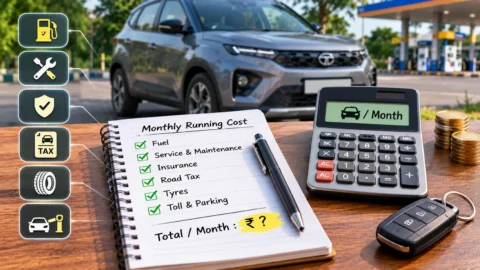
How to Calculate Your Car’s True Monthly Running Cost
Find out what your car really costs each month. Use this simple framework covering fuel, EMI, insurance, servicing, tyres and depreciation.
Petrol vs Diesel vs CNG vs Electric: Which Suits You?
Petrol, diesel, CNG or electric? Compare the real pros, cons and ideal drivers for each fuel type to choose the right car…
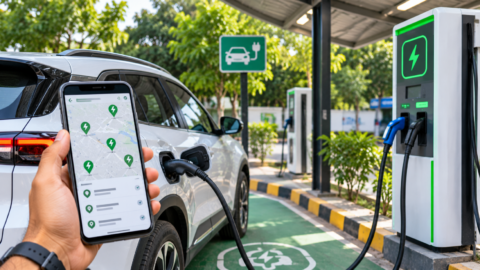
Public EV Charging in India: Charger Types, Apps and Etiquette
A practical guide to public EV charging in India: charger types, connectors, apps, payment, trip planning and good charging etiquette.
0 comments