
India’s Electric Car Sales Hit 36,900 in October, Up 76 Percent
India sold about 36,900 electric cars in October 2026, up 76 percent on last year. Tata and Mahindra took nearly two-thirds of the market.
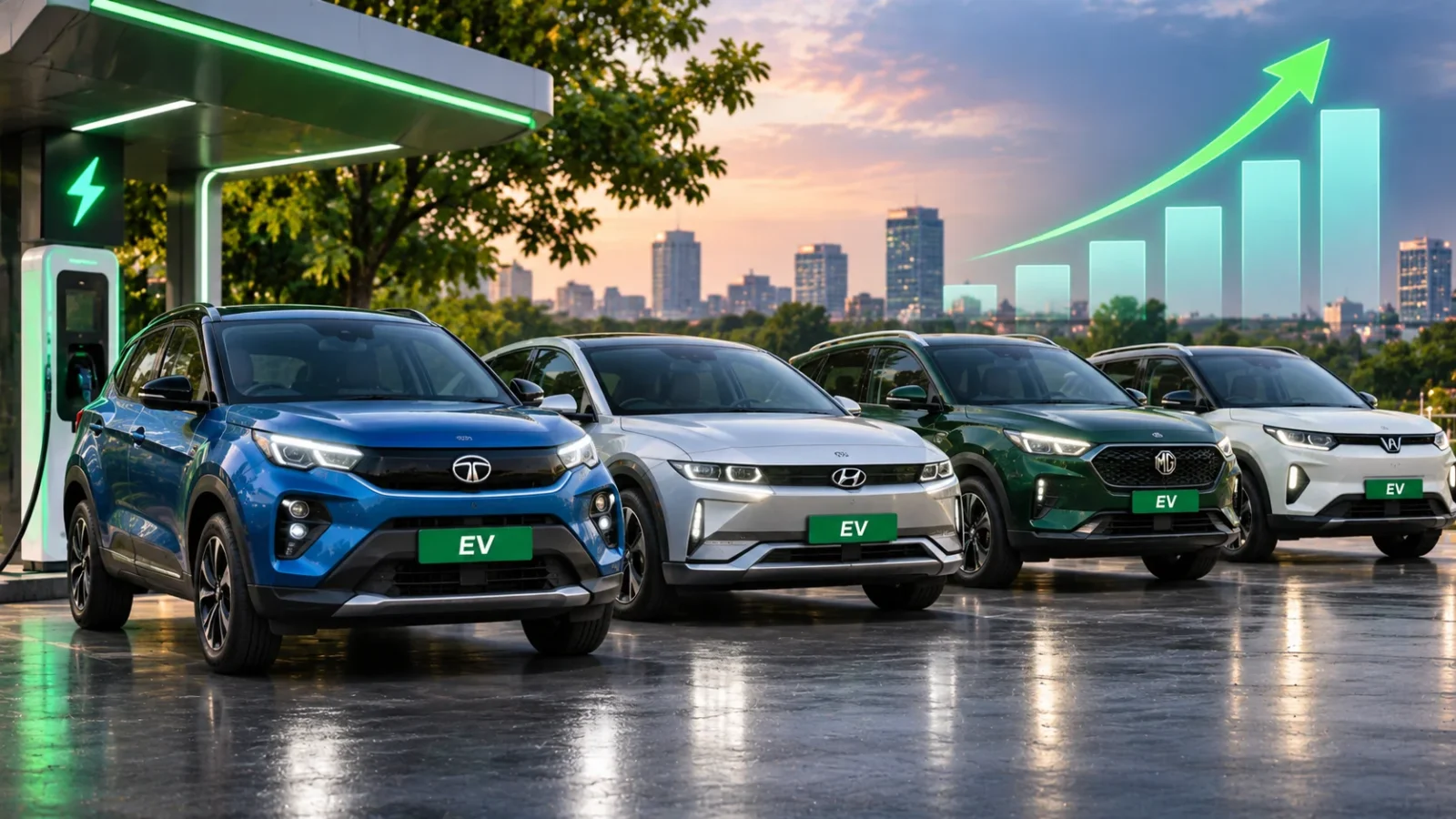
India’s electric passenger vehicle market kept growing in October 2026. According to Autocar Professional’s analysis of retail data, 36,911 electric cars, SUVs and MPVs were delivered to buyers, a rise of 76 percent from 20,954 units in October 2025.
The headline numbers
- October was the second-highest month ever, behind the record 38,355 units sold in September.
- It was the fifth month in a row above 30,000 units.
- Quarterly sales have climbed through the year: about 63,300 in Q1, 88,000 in Q2 and 105,600 in Q3.
- Autocar Professional’s running total for January to October is 293,877 units. If November and December together reach about 75,000, it estimates 2026 could finish near 375,000, a record. That is an estimate, not a forecast from the industry.
Other trackers report slightly different totals, between roughly 35,800 and 37,100, depending on which brands and data they include and when the data was pulled. The direction is the same in all of them.
Who sold what
| Brand | October units | Approx. share |
|---|---|---|
| Tata Motors | 14,654 | 40% |
| Mahindra | 8,541 (its best ever) | 23% |
| JSW MG Motor | 5,938 | 16% |
| VinFast | 2,570 | 7% |
| Kia | 1,395 | 4% |
| Maruti Suzuki (e Vitara) | 1,199 | 3% |
| Hyundai | 759 | 2% |
| BYD | 737 | 2% |
| Toyota (Urban Cruiser Ebella) | 190 | under 1% |
Tata and Mahindra together account for almost two out of every three electric cars sold. MG’s share has fallen to about 16 percent from 26 percent a year ago, even though its units grew modestly, because rivals grew faster.
Why the market is growing
- More choice: new models have arrived at many price points, from compact hatchbacks to three-row SUVs.
- Battery-as-a-Service: Tata, Mahindra and MG have extended BaaS options to several models, which lowers the upfront price by separating the battery cost. Terms vary, so read them carefully.
- Running costs: home charging is far cheaper per kilometre than petrol. See our running-cost comparison.
- Festive demand: October includes the festive buying season.
What buyers should take from this
- A bigger market usually means more service centres, more used-car data and more competitive pricing over time.
- The leaders’ dominance also means plenty of owner feedback exists for their cars. Our guide to EV battery life and warranty tells you what to check.
- Charging access still decides how well an EV suits you. See home charging and public charging.
We will cover the November numbers when the registration data arrives.
Sources
Autocar Professional (November 4, 2026), Evfy and CarToq reports on October 2026 Vahan and retail data.

Related articles
Tata Punch EV Edges Mahindra XEV 9S by 45 Units in October
The Tata Punch EV narrowly beat the Mahindra XEV 9S in October, 4,801 to 4,756 registrations. Here is what the tight race…
VinFast Is Now India’s Fourth-Largest EV Maker: What Is Driving It?
VinFast delivered 2,570 EVs in India in October, a 7 percent share just 15 months after entering. Here is what is behind…
Luxury EV Sales in India Rise 53 Percent to 868 Units in October
Luxury electric car sales in India rose 53 percent to 868 units in October. BMW led, Tesla held second place, and Mercedes-Benz…
0 comments