
Tata Punch EV Edges Mahindra XEV 9S by 45 Units in October
The Tata Punch EV narrowly beat the Mahindra XEV 9S in October, 4,801 to 4,756 registrations. Here is what the tight race says about India's EV buyers.
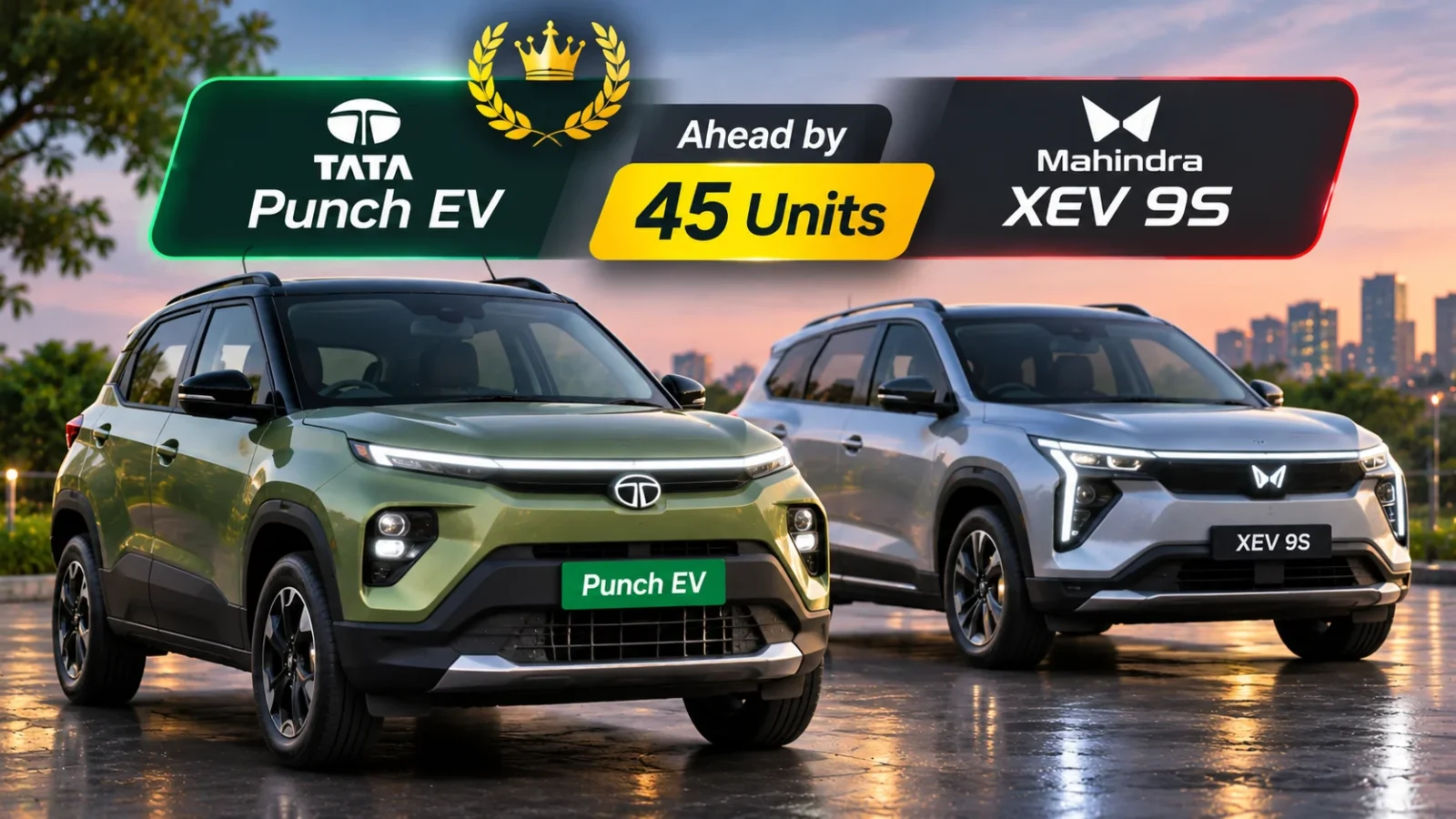
India’s best-selling electric car in October 2026 was decided by a margin of just 45 cars. According to ElecTree data collected on November 4 and reported by Business Today, the Tata Punch EV recorded 4,801 registrations, narrowly ahead of the Mahindra XEV 9S with 4,756, in a market of about 37,100 electric cars.
Two very different cars
| Tata Punch EV | Mahindra XEV 9S | |
|---|---|---|
| Type | Compact electric SUV | Three-row electric SUV |
| Typical buyer | City driver, first EV, smaller budget | Larger family wanting seven-seat space |
| October registrations | 4,801 | 4,756 |
That two cars at different ends of the size and price spectrum are neck and neck says something: EV demand is not confined to small, cheap cars. Buyers are also paying up for bigger, more feature-rich models.
A caution about rankings
Model rankings differ between trackers and by month. Autocar Professional, for instance, describes the Tata Nexon EV as Tata’s biggest volume driver overall, while ElecTree’s October snapshot puts the Punch EV at the top for the month. Registrations (vehicles registered with authorities) also differ from company wholesale figures, which count dispatches to dealers. When you read “best-selling”, check which data and which month it refers to.
What the numbers suggest
- Mahindra’s momentum: the company posted its best monthly electric SUV sales at 8,541 units, and the XEV 9S adds a three-row option to its BE 6 and XEV 9e line-up.
- Tata’s breadth: with a spread of hatchbacks and SUVs, Tata remains the market leader with about 40 percent share. Read our full October sales report.
- Space matters: a three-row EV doing this well suggests families are ready to go electric if the car fits their needs.
How to choose between a small and a large EV
- Daily distance: a bigger battery costs more but reduces charging stops. See how to get more range.
- Charging access: if you only have a standard socket, a smaller battery is easier to refill overnight. See home charging.
- Passenger needs: buy the size you use every day, not the one you need twice a year.
- Total cost: use our running-cost method to compare.
Sources
Business Today (November 6, 2026, ElecTree data) and Autocar Professional (November 4, 2026).

Related articles
India’s Electric Car Sales Hit 36,900 in October, Up 76 Percent
India sold about 36,900 electric cars in October 2026, up 76 percent on last year. Tata and Mahindra took nearly two-thirds of…
VinFast Is Now India’s Fourth-Largest EV Maker: What Is Driving It?
VinFast delivered 2,570 EVs in India in October, a 7 percent share just 15 months after entering. Here is what is behind…
Luxury EV Sales in India Rise 53 Percent to 868 Units in October
Luxury electric car sales in India rose 53 percent to 868 units in October. BMW led, Tesla held second place, and Mercedes-Benz…
0 comments